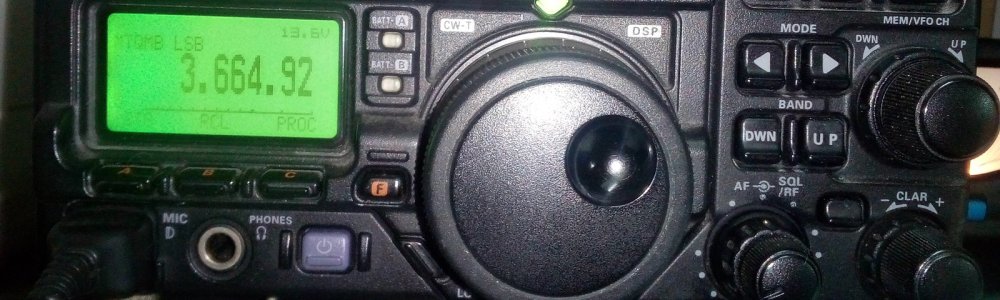
The Yaesu FT‐897D sits somewhere between my IC‐7300 and the little FT‐818ND. It’s a rugged, compact transceiver that covers HF, 6m, 2m and 70cm in one box, and with the right accessories it works just as well on the desk as it does away from the shack.
One radio, many bands
The FT‐897D covers all the HF bands from 160m to 10m, plus 6m, 2m and 70cm, in SSB, CW, AM, FM and digital modes. From a 13.8 V supply it delivers 100 W on HF and 6m, 50 W on 2m and 20 W on 70cm. Its receiver covers 0.1 to 56 MHz, 76 to 108 MHz, 118 to 164 MHz and 420 to 470 MHz. Yaesu designed it with portable use in mind: there’s room inside for battery packs, in which case the output drops to 20 W (10 W on 70cm).
FP‐30C internal power supply
Instead of batteries, mine has the FP‐30C fitted. This is Yaesu’s internal mains power supply for the FT‐897, which installs in the bottom of the radio in place of the battery pack. With it, the radio runs straight from the mains without a separate power supply on the desk, which keeps the setup neat and makes it easy to move the radio around.
LDG AT‐897Plus tuner
To get the most out of the FT‐897D on HF and 6m, I added an LDG AT‐897Plus automatic tuner. It’s made specifically for this radio: it bolts onto the side of the FT‐897 with four screws and becomes, in effect, part of the radio. It takes its power from the radio’s CAT port and reads the transmit frequency directly from the FT‐897, so it can recall the right settings from its 2,000 memories almost instantly.
The AT‐897Plus handles up to 125 W on SSB and CW, but it’s rated at 30 W for digital modes and on 6m. Something to keep in mind for FT8 and other digital modes, where the FT‐897D could otherwise easily deliver more than the tuner is rated for.
Digital modes with the SCU‐17
For digital modes I use the same Yaesu SCU‐17 USB interface and CT‐62 cable as with my FT‐818ND; Yaesu supports the FT‐897D with exactly the same set of cables. The SCU-17’s connection cable goes into the DATA socket of the radio for audio and PTT, and the CT‐62 takes care of CAT control.
Because the AT‐897Plus already occupies the radio’s CAT socket, the CT‐62 plugs into the second CAT port on the back of the tuner instead. The tuner passes CAT control through from the radio to the SCU‐17, so the tuner and the digital mode software can both talk to the FT‐897D at the same time. The CAT port runs at 4800 baud, so that’s the speed to set in the software as well.