UTC and time in logging
Why the clock matters
Radio amateurs all over the world log their contacts in Coordinated Universal Time (UTC). If everyone used local time, matching a QSO between two logbooks in different time zones would be a puzzle. With UTC, both stations write down the same time and the same date.
Table of Contents
UTC and Dutch local time
The Netherlands uses Central European Time (CET), which is UTC+1. During summer time, from the last Sunday of March until the last Sunday of October, it’s Central European Summer Time (CEST), UTC+2.
| Local time (NL) | Winter (CET) | Summer (CEST) |
|---|---|---|
| 08:00 | 07:00 UTC | 06:00 UTC |
| 12:00 | 11:00 UTC | 10:00 UTC |
| 20:00 | 19:00 UTC | 18:00 UTC |
| 00:30 | 23:30 UTC, previous day | 22:30 UTC, previous day |
That last row is the one that catches people out: a QSO just after midnight local time still belongs to the previous date in UTC. Contests and award periods also run in UTC, so a contest that starts “Saturday 00:00 UTC” starts on Saturday at 01:00 local time in winter.
You may also see UTC written as Z (Zulu), as in “1830Z”.
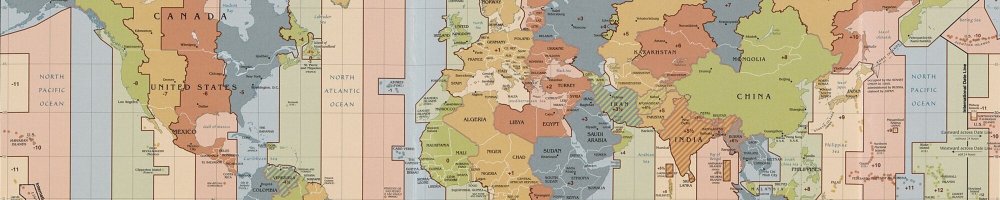
UTC offsets around the world
Handy when you want to know whether it’s day or night at the other end. Summer time in the southern hemisphere runs roughly from October to April, the opposite of Europe.
| Region | Standard time | Summer time |
|---|---|---|
| United Kingdom, Ireland, Portugal | UTC | UTC+1 |
| Netherlands, most of Western and Central Europe | UTC+1 | UTC+2 |
| Finland, Greece, Romania, Ukraine | UTC+2 | UTC+3 |
| Moscow (European Russia) | UTC+3 | none |
| South Africa | UTC+2 | none |
| India | UTC+5:30 | none |
| China | UTC+8 | none |
| Japan | UTC+9 | none |
| Eastern Australia (Sydney, Melbourne) | UTC+10 | UTC+11 |
| New Zealand | UTC+12 | UTC+13 |
| Brazil (São Paulo) | UTC−3 | none |
| United States, Eastern time | UTC−5 | UTC−4 |
| United States, Central time | UTC−6 | UTC−5 |
| United States, Mountain time | UTC−7 | UTC−6 (not in Arizona) |
| United States, Pacific time | UTC−8 | UTC−7 |
Why an accurate clock matters
LoTW only confirms a QSO when both logs agree on call sign, band, mode, and a time within 30 minutes. A clock that’s off by an hour, or a log entered in local time, means no confirmation.
FT8 and FT4 are even stricter. Transmissions start at fixed moments, so your computer clock needs to be within about a second of the correct time. Most operating systems synchronise the clock automatically via NTP; if you see many decodes with a DT of more than ±0.5 seconds, check your time synchronisation first.
Tips
- Set a second clock in the shack to UTC, or show it on your computer’s taskbar.
- Keep the clock of your transceiver right too. For modern Icom radios I wrote a script that sets the radio’s clock to the computer’s time whenever it’s connected; see Linux and Icom transceivers.
- Let your logging software take the time from the computer instead of typing it in.
- For paper logs, note the time zone at the top of each page.